

Hummingbird Migration, Nesting & Sugar Water Tips for Backyard Bird Lovers
Hummingbird Migration, Nesting & Sugar Water Tips for Backyard Bird Lovers
Few backyard visitors bring as much joy as hummingbirds. Tiny, fast, and full of personality, these beautiful birds are a favorite for nature lovers everywhere. Whether you enjoy watching them visit your garden or hover near a feeder, it helps to understand hummingbird migration, hummingbird nesting habits, and the safest way to prepare healthy sugar water for hummingbirds.
If you want to create a welcoming space for these delicate little birds, here is what you should know.
When Do Hummingbirds Migrate?
One of the most fascinating parts of hummingbird behavior is their seasonal migration. In many parts of North America, hummingbirds travel north in the spring and head south again in late summer and fall. Their exact timing depends on the species and where you live, but many people begin seeing them return as temperatures warm and flowers begin blooming.
Spring migration is often when hummingbird feeders become especially helpful. During migration, these birds need dependable food sources to support their long journey. In the fall, they continue feeding heavily before heading south again.
If you love seeing hummingbirds in your yard, keeping a clean feeder available during migration season can help support them as they travel.
When Do Hummingbirds Build Nests?
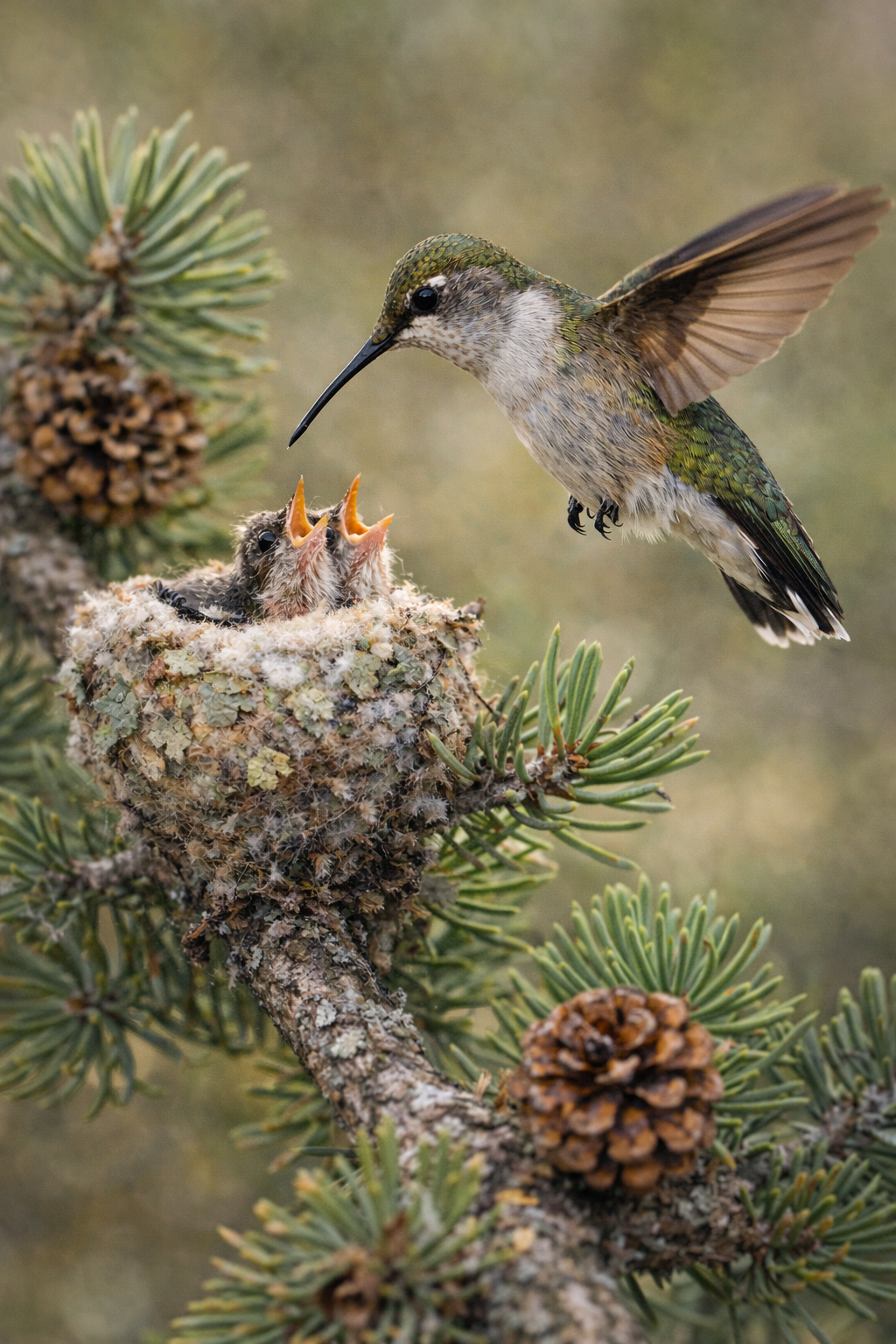
Hummingbirds usually build nests during the spring and early summer breeding season. The female hummingbird builds the nest by herself and also takes care of the eggs and chicks.
A hummingbird nest is amazingly small and carefully made. These tiny nests are often built on slender branches and made with soft plant fibers, bits of moss or lichen, and spider silk to help hold everything together. The result is a flexible, well-camouflaged nest that blends beautifully into the surrounding branches.
Because hummingbird nests are so tiny and delicate, they can be easy to miss. If you are lucky enough to spot one, it is best to admire it from a distance and avoid disturbing the area.
How to Make Healthy Sugar Water for Hummingbirds
If you want to feed hummingbirds safely, the best homemade nectar is simple:
Mix 1 part plain white sugar with 4 parts water.
Examples:
1 cup sugar to 4 cups water
1/2 cup sugar to 2 cups water
This basic hummingbird sugar water recipe is the safest and most commonly recommended option for backyard feeders.
Important Tips for Healthy Hummingbird Sugar Water
Use plain white table sugar only.
Use clean water.
Do not add red dye.
Do not use honey, brown sugar, powdered sugar, or artificial sweeteners.
Many people assume red dye helps attract hummingbirds, but it is unnecessary. A feeder with red parts is usually enough to catch their attention. The safest approach is simple: just sugar and water, no dye.
When Should You Change Hummingbird Sugar Water?
Fresh nectar is very important. In warm weather, sugar water can spoil quickly, and dirty feeders can grow mold or harmful bacteria.
A good rule of thumb is to change hummingbird sugar water every 1 to 2 days in hot weather and every 3 to 5 days in cooler weather. Clean the feeder thoroughly each time you refill it.
If the nectar looks cloudy, dirty, or has debris in it, change it right away. Clean feeders are one of the best ways to protect hummingbirds and keep them coming back to your yard.
Tips for Creating a Hummingbird-Friendly Yard
A feeder is helpful, but it is not the only way to support hummingbirds. You can also make your outdoor space more inviting by planting nectar-rich flowers and keeping your yard peaceful and safe.
A hummingbird-friendly yard may include bright tubular flowers, clean feeders, fresh sugar water, shrubs or trees for shelter, and a quiet environment with minimal disturbance near nesting areas.
Creating a safe place for hummingbirds can turn even a small yard into a beautiful stop along their journey.
Final Thoughts
Learning about hummingbird migration, hummingbird nesting, and healthy hummingbird sugar water can help you enjoy these amazing birds even more. With the right care, your yard can become a safe and welcoming place for them to rest, feed, and thrive.
Sometimes the smallest visitors leave the biggest impression. Watching a hummingbird hover near a flower or dart across the yard is a simple reminder of how much beauty nature brings to everyday life.
Categories
Recent Posts







OWNER| QUALIFYING BROKER License ID: REC-2025-0973
+1(505) 628-0311 | stephaniewebb034@comcast.net